


Is Meringue Buttercream Hazardous??
Decorating By JazzyBaker Updated 14 Jun 2012 , 5:21am by scp1127

Hi there!!
I'm baking a cake for a baby shower's friend and was planning on using apricot meringue buttercream as a filling, but since the recipe requires warming the egg whites over a "bain marie", I'm a little concerned about the whites been completely cooked or not? and about the safety of my pregnant friend to consume this 
Any opinions/advice??
Thanks!!!!!

It will be fine as long as you follow the instructions on the recipe. If using fresh eggs make sure you don't get any part of the yolk in the egg whites and heat the mixture to 140 degrees this pasteurizes the egg whites. Most bacteria is in the yolk. Your second option would be to purchase pasteurized just whites in the dairy (egg) section of the store.
Sorry to disagree, but the Egg Board and the FDA state that the eggs must reach 160 degrees to be safe.
Most SMBC recipes call for 140 degrees, but it just is not safe, especially for those who are highly succeptible, such as pregnant women.
I take my SMBC to 160 degrees and it is just fine.
Another highly undercooked item is custard, including pastry cream. If you are selling these items, use a thermometer and make sure the custard gets to 160, has the big burps of bubbles, and is then cooked for another one minute. Now it is safe, but still perishable.
Thank you guys!! Your help is great appreciated and I'll be sure to follow your instructions 
scp1127 why is it that you always have to try and put other bakers information down. It's like you have to try to out shine everyone else. Yes you might have a business and be a wealth of information but you honestly don't know everything. An egg white begins to coagulate or change from a fluid to a solid or semi-solid form at 144F. Look it up online it's common knowledge. If you are concerned use pasteurized egg whites from the store.

Hi there!!
I'm baking a cake for a baby shower's friend and was planning on using apricot meringue buttercream as a filling, but since the recipe requires warming the egg whites over a "bain marie", I'm a little concerned about the whites been completely cooked or not? and about the safety of my pregnant friend to consume this
Any opinions/advice??
Thanks!!!!!
A completely cooked egg white is called an egg white omelette.  You can also get salmonella from the shell, but normally that is taken care of by the producers washing them.
try this:
Are powdered egg whites pasteurized?
Yes. Egg white powder is dried egg white (pure albumen). It can be reconstituted by mixing the powder with water. The reconstituted powder whips like fresh egg white and, because it is pasteurized, can be used safely without cooking or baking it. The product is usually sold along with supplies for cake baking and decorating.

Doesnt cooking destroy bacteria? Is there any general rule for cooking eggs?
Even light cooking will begin to destroy any Salmonella that might be present, but proper cooking brings eggs and other foods to a temperature high enough to destroy them all. For eggs, the white will coagulate (set) between 144 and 149° F, the yolk between 149 and 158° F, and whole egg between 144 and 158° F. Egg products made of plain whole eggs are pasteurized (heated to destroy bacteria), but not cooked, by bringing them to 140° F and keeping them at that temperature for 3 1/2 minutes. If you bring a food to an internal temperature of 160° F, you will instantly kill almost any bacteria. By diluting eggs with a liquid or sugar (as in custard), you can bring an egg mixture to 160° F. Use these temperatures as rough guidelines when you prepare eggs.
http://www.incredibleegg.org/egg-facts/egg-safety/safe-food-handling-tips
Whether or not you follow these guidelines is up to you. FDA also says 160 degrees.
http://www.fda.gov/food/resourcesforyou/Consumers/ucm077342.htm
food for thought: Poeple concerned should be more worried about fast food than eggs, and you can't get salmonella from a properly cooked egg.
In 2001 (the most current collection data available at the CDC), only 11.3 cases were found per 100,000 people. That is a percentage risk of only 0.0113%. Is there some under-reporting? Of course - mild cases probably go undetected. The 0.0113% represents the total risk of an average American (in New Zealand the risk is a bit higher, for some reason)- including all sources of infection and all strains. So the infection from an egg, is even smaller, and I'll look at that in a bit. Moreover, 26% of the cases were from children under the age of 5. So if you're older than 5 years of age, then your risk of getting salmonellosis is only .00836%
Just for reference, the odds of getting hit by lightning are 1 in 280,000 or 0.00036% (according to NOAA). - 31 more times likely to get salmonellosis than to be struck by lightning.
Now, the above figure is all types of salmonellosis, the one from eggs is usually only S. Enteritis. S. Enteritis accounts for 17.7% of the isolates found. So this means that
your risk of getting salmonellosis from S. Enteritis is only .002% and it falls to .00148% if you are over the age of 5.
As a side note, the risk of getting a Salmonella poona infection, is .00011% - this is salmonella found on fruits - such as melons - and vegetables. So where do we stop? Must we pasteurize melons and fruits before we eat them?
Salmonella typhimurium is by far the most frequent bacteria causing salmonellosis (representing 22% of all cases). Epidemiolgy suggests that the greatest source of this infection is from handling wild birds, from other people who are already infected, and from consumption of fast food. Statistically speaking, SCDer's not eating fast food should really help reduce your risk with this type of infection.
In 2001 (the most current collection data available at the CDC), only 11.3 cases were found per 100,000 people. That is a percentage risk of only 0.0113%.
Could that be because the vast majority of eggs are cooked properly?
In 2001 (the most current collection data available at the CDC), only 11.3 cases were found per 100,000 people. That is a percentage risk of only 0.0113%.
Could that be because the vast majority of eggs are cooked properly?
It could be. but 11.3/100,000 also takes into account people who like their eggs sunny side up and runny. or eat steak tartar with a raw egg yolk on top, or eat Tiramisu with raw egg yolks and sometime whipped raw egg whites too, protein drinks with raw eggs, eggnog, Caesar salad dressing and other recipes with raw egg yolks, whites or both.
In 2001 (the most current collection data available at the CDC), only 11.3 cases were found per 100,000 people. That is a percentage risk of only 0.0113%.
Could that be because the vast majority of eggs are cooked properly?
It could be. but 11.3/100,000 also takes into account people who like their eggs sunny side up and runny. or eat steak tartar with a raw egg yolk on top, or eat Tiramisu with raw egg yolks and sometime whipped raw egg whites too, protein drinks with raw eggs, eggnog, and other recipes with raw egg yolks, whites or both.
A more relevant statistic would be cases per 100,000 people eating properly cooked eggs vs. cases per 100,000 people eating one of the underdone/raw examples you stated. If you want to know how much safer it is to cook eggs properly you would need to compare those two numbers, mixing these two data sets doesn't really tell you much.
In 2001 (the most current collection data available at the CDC), only 11.3 cases were found per 100,000 people. That is a percentage risk of only 0.0113%.
Could that be because the vast majority of eggs are cooked properly?
It could be. but 11.3/100,000 also takes into account people who like their eggs sunny side up and runny. or eat steak tartar with a raw egg yolk on top, or eat Tiramisu with raw egg yolks and sometime whipped raw egg whites too, protein drinks with raw eggs, eggnog, and other recipes with raw egg yolks, whites or both.
A more relevant statistic would be cases per 100,000 people eating properly cooked eggs vs. cases per 100,000 people eating one of the underdone/raw examples you stated. If you want to know how much safer it is to cook eggs properly you would need to compare those two numbers, mixing these two data sets doesn't really tell you much.
but if you would have read the rest of it you would have seen that salmonella doesn't only come from eggs and the risk of getting it from eggs is about 18% of total cases, which is lower than from other foods.
but if you would have read the rest of it you would have seen that salmonella doesn't only come from eggs and the risk of getting it from eggs is lower than from other foods.
That may be true, but it has no relevance to the relative safety of eating cooked vs. undercooked eggs.
The inside of an egg was once considered almost sterile. But, over recent years, the bacterium Salmonella enteritidis (Se) has been found inside a small number of eggs. Scientists estimate that, on average across the U.S., only 1 of every 20,000 eggs might contain the bacteria. So, the likelihood that an egg might contain Se is extremely small 0.005% (five one-thousandths of one percent). At this rate, if youre an average consumer, you might encounter a contaminated egg once every 84 years.
Bacteria, if they are present at all, are most likely to be in the white and will be unable to grow, mostly due to lack of nutrients. As the egg ages, however, the white thins and the yolk membrane weakens. This makes it possible for bacteria to reach the nutrient-dense yolk where they can grow over time if the egg is kept at warm temperatures. But, in a clean, uncracked, fresh shell egg, internal contamination occurs only rarely.

hazardous to your pockets possibly
hazardous to addiction HELL yes
Hazardous to health not unless the persons allergic to eggs
most recipes say cook to 140 but what does it kill anyone to cook the mixture to 160? I always cook my mixture to 160....
Don't know if anyone else responded about that, I didn't bother to read the rest of the post. You kind of get tired of seeing the same people make petty arguments ALL the time
I will remind doubters that spinach leaves were contaminated with bacteria from neighbouring cattle farms a few years ago...resulting in many illnesses and destruction of several crops.
http://www.foodsafetynews.com/2011/10/spinach-recall-in-california-due-to-salmonella/
http://www.foodsafetynews.com/2010/07/another-spinach-recall-for-e-coli-contamination/
http://efoodalert.net/2012/02/09/114-tons-of-spinach-recalled-by-stealth/
US grown spinach was recalled in Canada because contaminated bags of "prewashed" spinach were found with live bacteria.
Commonsense that rare commodity) will suffice.
Wash all fresh fruit before you cut/peel/eat it. I find that some pears are so heavily waxed that I add a little dish soap, and I rinse well.
Open and check every carton of whole eggs you buy at the store. If you see bits of feather, find another carton or farm. If you see cracked eggs, find another carton. Make sure you get your eggs home without the cartons flipping open in transit. Keep eggs refrigerated at all times--don't keep them in your trunk on a summer day while you run other shopping errands.
Instead of Swiss meringue, consider making the Italian kind, because the egg mass is slowly heated to about 180F by the mass of the sugar at 248F.


The inside of an egg was once considered almost sterile. But, over recent years, the bacterium Salmonella enteritidis (Se) has been found inside a small number of eggs. Scientists estimate that, on average across the U.S., only 1 of every 20,000 eggs might contain the bacteria. So, the likelihood that an egg might contain Se is extremely small 0.005% (five one-thousandths of one percent). At this rate, if youre an average consumer, you might encounter a contaminated egg once every 84 years.
Bacteria, if they are present at all, are most likely to be in the white and will be unable to grow, mostly due to lack of nutrients. As the egg ages, however, the white thins and the yolk membrane weakens. This makes it possible for bacteria to reach the nutrient-dense yolk where they can grow over time if the egg is kept at warm temperatures. But, in a clean, uncracked, fresh shell egg, internal contamination occurs only rarely.
Thank you. The average consumer will never encounter a contaminated egg.
And, if you purchase your eggs from a local farmer whose chickens are pastured, rather than a factory farm where the chickens essentially spend their lives being tortured in filthy crowded conditions, your chances of getting a contaminated egg are even less. Also, pastured eggs taste better, have more vitamins, and less cholesterol than their factory farm counterparts. Shop your local farmers market, you won't regret it. http://www.localwineevents.com/resources/articles/view/822/more-nutritious-eggs-from-pastured-chickens
Edited to add: "Free range" and "Cage free" are legal terms that mean almost nothing about the way the chicken lives. Here's a great video that explains the difference. Look for "Pastured" eggs. http://grist.org/sustainable-farming/the-story-of-an-egg-video/
And here, a startling visual on the difference between grain-fed factory farm eggs and pastured eggs. I have seen it personally. http://homesteadsurvival.blogspot.com/2012/05/c-what-did-his-chicken-eat-what-did.html
Obviously someone who bakes and uses 100s of real eggs a week is more likely to encounter a bad egg but the odds are still 1 in 20,000 eggs and both the consumer and the baker will most likely cook that salmonella egg to the point where it is safe to eat.
If you eat all your eggs raw it will take the average person 84 years to find a bad one, if you cook all your eggs over 160 degrees you will never find a bad one. If you buy fresh eggs, keep then refrigerated and make sure the shells are not cracked and even wash the eggs before cracking them you further reduce the chances for salmonella.
[
And, if you purchase your eggs from a local farmer whose chickens are pastured, rather than a factory farm Look for "Pastured" eggs. http://grist.org/sustainable-farming/the-story-of-an-egg-video/
Not to be confused with pasteurized eggs, which is how I quickly first read that. 
Sweettreat, if information about food safety is contrary to the in-depth studies of the FDA, the laws and guidelines of our local HD's, and that small change could possibly cause a baker to be liable for a food illness, should I sit back and not say a word? More importantly, consumers have a right to consume food that is up to standards. Ask a pregnant woman if she prefers 140 or 160. These decisions are not ours to make.
You can have all of the liability insurance you want, but an injury or illness cause by a business or anyone who was paid, can easily pierce an insurance policy and a corporation. Since most of us sell cakes, licensed or not, my information, again, is factual, and is food for thought for people who may want to reconsider habits and methods that leave them vulnerable.
It really does not matter, Kelleym, whether someone may or may not encounter a contaminated egg. The facts are that every health department uses these guidelines and these are the ones that we are bound by by our licenses. Their laws, their requirements, not our own.
Sweettreat, if information about food safety is contrary to the in-depth studies of the FDA, the laws and guidelines of our local HD's, and that small change could possibly cause a baker to be liable for a food illness, should I sit back and not say a word? More importantly, consumers have a right to consume food that is up to standards. Ask a pregnant woman if she prefers 140 or 160. These decisions are not ours to make.
You can have all of the liability insurance you want, but an injury or illness cause by a business or anyone who was paid, can easily pierce an insurance policy and a corporation. Since most of us sell cakes, licensed or not, my information, again, is factual, and is food for thought for people who may want to reconsider habits and methods that leave them vulnerable.
It really does not matter, Kelleym, whether someone may or may not encounter a contaminated egg. The facts are that every health department uses these guidelines and these are the ones that we are bound by by our licenses. Their laws, their requirements, not our own.
Sorry, just trying to bring a little perspective into play and also educate people about how they can start buying safer, better eggs that come from humanely treated chickens. 


I go to 160 for the eggs and sugar. My SMBC has never been better.
SoFlo, you are correct. Personally, I love authentic Key Lime Pie, sunny side up eggs, and raw cookie dough.
Thanks, I'm still gonna make my Tiramisu with raw egg yolks. I only make it for myself and friends, and I always use the freshest eggs I can find, and now that I know that the egg white is more likely to have the salmonella I feel better only using the raw yolks, Last time I made it I went looking for pasteurized eggs and couldn't find them. I cheated the recipe a little, I used some Cool Whip instead of whipped egg whites and whipped heavy cream and used sponge cake instead of lady fingers.. Also, my friend makes a great Caesar salad, he said it's the original recipe so it must have an egg yolk in it.
Well, I just I want to say THANKS to everyone who took the time to answer in as a little or as much detail as he/she could! I belive this exact exchange of ideas is what makes CakeCentral such a valuable tool!!
So, thanks again for all the information, and I'll definitely go for super fresh eggs and 160F
SoFlo, pm me and I'll give you a tip on making those yolks safe. I found a way to make my Key Lime Pies safe using the original method. You may be able to apply it to the Tiramisu. Now I can finally sell my Key Lime Pie.
I would really like to start over and bury the hatchet. Susan
SoFlo, pm me and I'll give you a tip on making those yolks safe. I found a way to make my Key Lime Pies safe using the original method. You may be able to apply it to the Tiramisu. Now I can finally sell my Key Lime Pie.
I would really like to start over and bury the hatchet. Susan
Sure, my hatchet is buried. The past is over and I don't like to hold a grudge. As far as the egg yolks, I am not a good cook and don't trust myself heating them and not coming up with cooked eggs, I don't even have a food thermometer. That's why I like simple baking so much, you just put things together with the instructions and they make themselves in the oven.
I recently found a key lime pie recipe I really liked, but it't not a fancy one, it uses sweetened condensed milk and 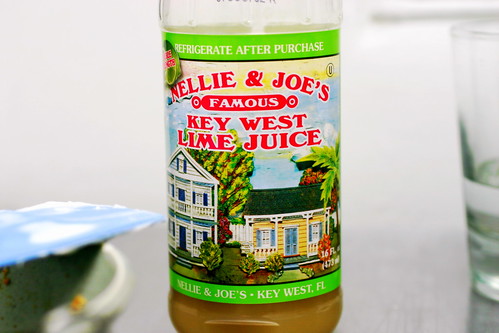
and is baked so the egg yolks are safe. I'm sure it would be called cafeteria style ( I heard that term on Next Food Network Star and I thought it was funny) , but I liked it a lot, even with the premade store bought crust.
.
Quote by @%username% on %date%
%body%