


How Much To Charge?
Business By thebittersweetbakehouse Updated 14 Jun 2012 , 2:00pm by thebittersweetbakehouse

Ive recently started up a cake business from home, a hobby turned business...but im really struggling with how to price my cakes?
Ive looked at the local bakeries and home decorators in my local area but the prices differ so much. I don't want to over charge and scare people away, but ive sourced a few local decorators and believe my work is of a higher standard so have priced higher.
Im a bit stuck so anyone with any advice or re-assurance would be a great help!
Thanks[/img]

Find out your cost for your products (ingredients, labor, and overhead) then add a profit margin that brings you up to market rate for your targeted customers.

You need to determine how much the ingredients will cost you, how long it will take you to make the cake so you can add "your wage per hour" x "no. of hours," some for overhead (electricity to run the oven, desposable piping bags, dishwashing liquid, etc.), and the amount you want as profit.

Definitely don't undercharge, and definitely remember to count your labor as a cost. I've been in business for about 6 months, and still get nervous when I send a quote to a customer, but I've never once had one back out (knock on wood!). I have heard "Hmmm, that was a little more than I wanted to spend, but that's okay". All of my business is word of mouth, so maybe it helps that most new customers have heard straight from a friend that I have a quality product (or tried something themselves!). I did check competitor's pricing though, too... you have to make sure you're not totally out of range.
Follow what Jason recommended, though, and just go for it! People will pay for quality. And if your brand and business image project the same quality that you're making, people won't even second guess you.
I've gotten the "that's more than I want to spend." I, however, know what I am worth. If I make a cake for close friends, I only charge for ingredients, as my friends are all very good to me. The rest, I charge the same as my local bakery, priced per serving. It's usually $2.00 each for cupcakes and about $3.00 a serving for cake. I must note I do not make wedding cakes, or my prices would be much higher.
It's true, there are several factors to consider when pricing your cakes, but there are some basic formulas that should get you started in the right direction. First, you need to know how much the ingredients cost. The experts in the restaurant industry state that your costs should be somewhere between 25 - 35% of what you charge. But in the baking business, lower is better - especially with the high labor that can be associated with decorating wedding cakes. Yes, costing can be a tedious process, but not spending the time calculating food costs means that you probably won't spend time watching all of your other costs and will price by the "what my competitor charges" method. (ack! now that's a recipe for disaster!) Remember: the first step is admitting that you have a problem...
To begin costing cakes, you will need to have several pieces of information at hand (bills, receipts, recipes) and a decent scale. You will need to break all of your ingredient costs down by the pound (or ounce, or gram, etc.) For example, a 50 lb sack of flour costs $15.74. So, my price per pound for flour is $0.31. [50/15.74=0.31]. After you have broken costs down by the pound, then you can plug this information into your recipes. Say you have a chocolate cake that uses 15 lbs of flour - you know that your flour costs for this batch are $4.65. And so you go through your recipe, calculating all of the ingredient costs based on the weight of each ingredient and its cost per pound. When you have your cost per batch done, then you have to weigh the batter (or unbaked product) for each pan, or portion that you are making. Using chocolate cake as an example, the cost of a 68 lb. batch of chocolate cake is $47.74. The price per pound of batter is $1.42. We calculated this by dividing the batch weight (68 lbs) by the cost per batch ($47.74). Now, you need to know how much the layers cost. Lets use a 12" round as an example. Place the 12" round pan on a scale, tare (zero) out the weight and pour in the usual amount of batter. If this is your normal weight - record it - and then live and die by it. In our case, a 12" round weighs 1.75 lbs. So, the cost for one 12" layer of chocolate cake is the batch weight per pound x the weight of the cake in the pan, or $1.42 x 1.75 = $2.48. Now, that's just one layer of chocolate cake. It's not a whole wedding cake. To calculate a wedding cake, you will need costs for all of the different sizes of tiers, the fillings, the icing, the cake drum, etc. Even after all of this hard work (my brain hurts), there is still more work to do! You will also need to know all of your overhead (rent, electricity, insurance) plus all of your labor costs. This goes into what you charge, too. So - it's not all about what your competition is charging. You have to know your own costs so that you can stay in business. Building the spreadsheet is the time-consuming part, but once you have it, the only thing that will change are the fluctuating cost of ingredients - which is easy to plug in down the road. At the end of the day, a healthy business should ideally be operating at a 10% NOP (net operating profit), or greater. You calculate a NOP by doing this: Take the Sales $ amount and subtract COGS (that's the ingredients + production labor + supplies) to give you the Gross Margin. Then, subtract Expenses (all other overhead) from the Gross Margin. Take that dollar amount and divide it by the Sales number to give you the NOP%. If you aren't operating at a profit after doing those calculations, then you definitely need to reexamine your pricing.

cr8cakes, I see that you joined today and this is your first post. So you probably don't realize that many members here are people who bake at home and use volume (not weight) measurement. That makes a huge difference in costing ingredients.
What you explain is very important but we don't have MBA degrees so plain talk would be more useful. The OP said she, "recently started up a cake business from home." Can you please explain your post again but in terms we can understand? 

And don't forget to budget for paragraph breaks. 
Okay - well thanks for the warm welcome, guys. Jeesh!
To put things in perspective, when my sister and I started out ten years ago, it was just the two of us. Now we are a company of 20 employees with an annual revenue of 1.5 million. If you would like me to keep it "simple" for the home bakers, I am happy to.
First: you can (and should) cost out all of your recipes. If you don't - when you grow - and you will if your product and customer service are excellent - you will need to know how to adjust as your NOP (that's net operating profit) shrinks. Because that is what happens as you become "more successful". Better now than later.
Second: when it comes to labor (even if it is just you) you should at least PRETEND like you pay yourself a decent salary. Just plug in the cost of an average high-end cake decorator's salary of $20.00 an hour. Even if you don't pay it now - you will at some point. That is, you'll pay it if you want to keep your sanity.
Third: Your house, your kitchen, the electricity, etc. DO matter. You need to factor in a portion of these costs into your business.
Fourth: If you price your cakes simply to undercut commercial bakeries - then you devalue the business of wedding (and other highly customized) cakes in general. If you are in fact better - then charge it! It's called "perceived value".
Fifth, and finally: If you don't treat your cake business as a business, then it is just a hobby. It will remain just that until you begin to think differently.
If you would like more info on cake pricing I am happy to contribute what I can, where I can - as I struggled to find this information when I first started out. Here is a link to my website: businessandbaking.com Thanks!
cr8cakes: Thank you for your input. I think you shared some very valuable information. No, it may not be how many Cake Central members operate (especially the OP, who is just getting going), but the bottom line is still important. To the OP, I would say find a way to scale/cost your ingredients, figure out how much of each recipe you need for each size cake (I use 1.0, 1.5, 2.0, etc as references to recipe multiplication both for calculating cost and for figuring out how much I need to make depending on the cake size. If you spend a little time getting to know Excel, you can plug in your original recipe, then multiply the entire column to multiply the recipe. I think Cake Boss does that, too, but I have a Mac, so no Cake Boss for me, yet.), and then use that as a STARTING point for pricing.
Labor is also very important, even if you're gonna reinvest every cent except the ingredient/supplies costs back into your business.
Anyway, I just wanted to say that even though I agree that cr8cakes may have presented the information in a way that is a little out of the scope of how many of us operate, the message is still good, and can still be applied to every baker trying to make some income from the craft. And thank you for taking the time to contribute! Every bit helps.
Kelleym takes the cake (no pun intended!), though: "Bottom line, know your costs, evaluate your market, and find your place in it."


Welcome cr8cakes - the information in your post was excellent and it sounds like you've got some great business experience - thanks for sharing!
Cris.
Thank you all for taking the time to reply!
I have just launched a little website with some of the designs i have produced www.thebittersweetbakehouse.co.uk for anyone who cares to take a look - to hear your feed back or what you would hypothetically charge if they were your designs would be great. Note - the prices online are NOT the price i charged for them when made, more like half or less! But having now made some designs, and to a time scale, i now have a better estimate of timings to reproduce these.
I have researched a lot in area and the artistic style cakes in which i would like to specialise, don't seem to be anything like that of anyone else's.
Thankyou for your advice on ingredients break down costs, i have done this along with pricing for the drums/fondant/ribbon extras etc....it just really seems to be pricing my time, and my being honest and realistic about how long the cake make take me to decorate that seems to be my down fall!
Im sure its all just new and once ive got my confidence up i hope my ability to price my work will reflect that - Thanks again
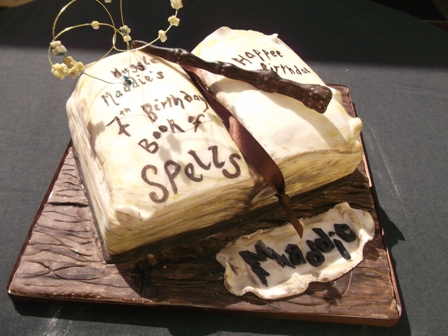
NB- I have an added an attachment (i think!) of one of my designs to give you an idea of my work 
Quote by @%username% on %date%
%body%